Featuring guest authors; crafting tips and projects; recipes from food editor and sleuthing sidekick Cloris McWerther; and decorating, travel, fashion, health, beauty, and finance tips from the rest of the American Woman editors.

Note: This site uses Amazon affiliate links. As an Amazon Associate, I earn from qualifying purchases.
Showing posts with label Druids. Show all posts

Friday, September 9, 2022

BOOK CLUB FRIDAY - AUTHOR LYNNE HANDY ON DRUIDS, CELTS, TREES, AND OLD IRELAND AS INSPIRATION

Lynne Handy is a librarian, genealogist, poet, and author of the Maria Pell mystery novels. In Old Sins, she once again creates characters, who carry out acts of "wild justice."  Handy combines a love of history and nature to provide dramatic settings. Her style is lyrical, but to the point. Learn more about her and her books at her website. 

Writing Old Sins, a Tale of Wild Justice in the Emerald Isle

According to the Book of Invasions (thought to be written by Christian monks), Ireland was originally settled by the descendants of Noah, who arrived some three hundred years after the Flood. Generations later, plague infested the land, killing most of the inhabitants. Those who survived migrated north to other lands, where they learned about divination, druidism, and philosophy. Returning to Ireland, they called themselves the Tuatha Dé Danann, or people of Danu, the great earth goddess, and lived in peace until the warlike Celts came. To prevent bloodshed, the Tuatha took up residence in grassy mounds and ancient hills, beneath thorn trees and circles. Their love for Ireland was so strong, they could not leave. (Old Ways, Old Secrets, Jo Kerrigan). 


What a great setting for a mystery novel! In Old Sins, poet Maria Pell visits Ireland to research ancient Celts as source material for a book of poems. Since little exists in the form of written material, she relies on faerie trees, mysterious mounds, sacred stones, and artifacts for inspiration, and attempts to get inside the minds and hearts of ancient people, who walked the earth as extensions of the natural world, taking shelter where they could—under trees or in caves. Faith, perhaps, became synonymous with shelter. Trees gave cover, and in some cases, as with oaks and their acorns, also provided food. 


Worship of trees, particularly the oak, was a natural outcome. The oak, and other trees were considered sacred with magical properties. Esteemed for longevity, the oak represented wisdom, stability, and sovereignty. Kings were consecrated under the oak. St. Bridgid built her cell under an oak. A deity directed St. Brendan to use oak boards to build the boat that may have transported him to North America over a thousand years before Columbus. 


Could trees have a secret world? And could the ancients, with their affinity to nature, have known about it? In The Hidden Life of Trees, Peter Wohlleben claims trees are social beings that communicate through root systems, sending nutrients to each other when in need—particularly to old venerable stumps they wish to keep alive. Stumps may be parent trees, necessary to survival in ways not yet understood. Other studies have shown that trees communicate with each other through smell, and perhaps even sound. Have you ever heard the crackling of roots?


I wish I had read Wohlleben’s book before writing mine. It would have allowed me to provide a richer understanding of pagan thought and practice. 
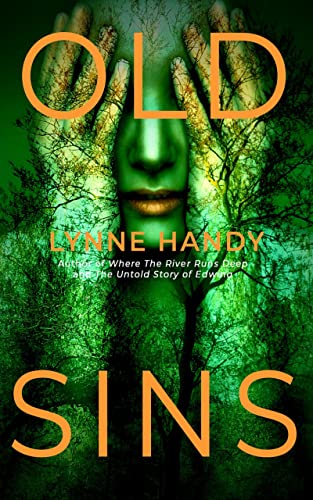
 

Old Sins

A Maria Pell Mystery, Book 3


Battered by her archeologist lover's betrayal, poet Maria Pell flees to an Irish village to study prehistoric people and write her next volume of poetry, but her sanctuary is invaded first by her moody cousin and then by her Togolese lover, who unexpectedly shows up on her doorstep. When the discovery of a girl's body on a nearby beach reawakens a devastating childhood memory, Maria's days become haunted. As teenage girls disappear, villagers are terrified that sex-traffickers are targeting their community. With crimes to be solved, both past and present, Maria risks her life to bring the perpetrators to justice.


Buy Link 

Tuesday, February 4, 2020

AUTHOR CORNELIA AMIRI ON DRUIDS, UNICORNS & THE SUMMER SOLSTICE IN WINTER

Today we welcome back Cornelia Amiri who says her superpower is turning her imagination into thirty-seven published sci-fi/fantasy romance books. Learn more about Cornelia and her books at her website.

Experience The Summer Solstice In Winter
In many parts of the US and the world, it’s still bitterly cold, and what better way to warm up than to think of summer, specifically the Summer Solstice. This was an important day in ancient times. The Neolithic tribes and later the Bronze Age and Iron Age Celts lived off the land, so the sun's heat and light were vital to survival. The Neolithic British built monuments, such as Stonehenge, that framed the rising or setting of the Sun on the solstices. And, the Celts celebrated the sun’s movements on the shortest day of the year in winter and on the longest day of the year in summer with Solstice Festivals. 

The word Solstice comes from the Latin sol meaning sun and sisto which means to stand still. But Alban Hefin, the name the Druids gave to the Celtic Summer Solstice means the Light of the Shore or Light of Summer. The shore because it’s where the elements of land, water and sky meet, which the druids considered a place that’s in-between worlds, and the light of the summer because that’s when it shines at its broadest.

The Druids saw the Summer Solstice as a time to open up a path towards light and abundance and banish evil spirits through the light of the sun. They’d pray for a good harvest, as it was halfway through the growing season. Also, as the Summer Solstice was seen as a time of change, nature, and new beginnings, it was associated with fertility. Feasting and dancing took place and bonfires were lit in celebration. And lovers traditionally clasped hands and leaped over bonfires. Some believed the higher the couple jumped, the higher their crops would grow. 

The ancient Celts also told and acted out the legend of the Oak King versus the Holly King. On the 21st of June the Oak King is at his strongest. But his power gradually weakens until the Winter Solstice on December 21 when the Holly King reins again.

In many regions (especially Europe), June 24 marks the midpoint of the growing season, halfway between planting and harvest, and is called Midsummer. People also have festivals for Midsummer where they feast, dance, and sing.

In 2020 the Summer Solstice takes place in the Northern Hemisphere on Saturday, June 20th at 5:44 eastern time. The Farmer’s Almanac has a sunrise and sunset calculator to calculate  how many hours of sunshine you’ll get in your location on the solstice.

My latest book, The Unicorn and the Druidess, is set in Iron Age Britain during the Summer Solstice. With it you can experience the Summer Solstice even now, in winter. 

The Unicorn and the Druidess
Dridry and the Beast, Book 4

At Summer Solstice people aren’t what they seem—they could be…a unicorn…a god…or someone you fall in love with.

Druidess Maelona pursues a unicorn into the woods and returns with a runaway slave boy she takes under her wing. Before she can go back to look for the unicorn, a handsome stranger ignites a fiery attraction within her. But she can tell he’s keeping something from her. She suspects that he may be a Roman spy.

God Epon’s blood burns at first sight of the gorgeous Druidess. Goaded by his desire for her he passes through the portal from the otherworld as a unicorn. Then he runs into the forest and she gives chase. There he shapeshifts into human form so he can get to know her better. Plus, to win her trust, he fights the Romans and saves her tribe. But even then, will he and Maelona be able to overcome the surmountable odds of a romance between a mortal and immortal being anything more than a summertime tryst?