Featuring guest authors; crafting tips and projects; recipes from food editor and sleuthing sidekick Cloris McWerther; and decorating, travel, fashion, health, beauty, and finance tips from the rest of the American Woman editors.

Note: This site uses Amazon affiliate links. As an Amazon Associate, I earn from qualifying purchases.
Showing posts with label Justin Murphy. Show all posts

Monday, March 6, 2023

AUTHOR JUSTIN MURPHY ON THE FILM TRILOGY THAT WASN'T

Today we welcome back Justin Murphy, author of crime, mystery, and detective fiction as well as biographical works. Learn more about Justin and his books at his Facebook Author Page.

The Film Trilogy That Could’ve Been

After titles in my Unsung Heroes In Entertainment series about forgotten Star Trek writer-producer Gene L. Coon and lesser-known Marvel comic book creator and artist Jack Kirby did well, I decided to write about something different. A darker topic despite staying in the same lane. One about a character intended to age throughout three different phases of Los Angeles history.


Jake Gittes was a young private investigator and the title character in Chinatown, probing into an extramarital affair tied to a Depression era water and power scandal. The film also centers around the wife and daughter of the two powerful moguls and what secret she hides beneath the surface. One leading to a fatal blow neither this woman nor the private eye is prepared for.


Chinatown debuted in theaters on June 20, 1974, and became a box office hit, making Jack Nicholson a household name beyond the confines of films such as Easy Rider and Five Easy Pieces. The movie also proved to be the apex of the film noir renaissance in the 1970s. On the exact same day, a year later, Jawsushered in a focus on larger-than-life blockbusters and franchises. As a result, the film industry never looked back.


Despite its success, it would be over a decade and a half before the Chinatown sequel came out. While planned to be filmed and released in this fashion, many behind-the-scenes squabbles delayed the second installment of the Jake Gittes trilogy from its initial attempt at filming in April 1985 to its eventual release more than five years later, on August 10, 1990.


The Two Jakes concerned the now middle-aged Jake Gittes investigating another extramarital affair. This time tied to a real estate development built over a gas line after World War II. He is also surprised to learn how the mogul’s wife is connected to the tragic woman from the first film. Unlike Chinatown, this installment was not a box office hit. Many reasons have been given and could be interpreted as to why it paled in comparison to its predecessor. One might be Jack Nicholson’s attempt at being both lead actor and director left the final presentation lackluster and odd, including random camera shots that didn’t make sense. Tastes in both the film industry and the detective or mystery genre changed a great deal in the fifteen or so years between Chinatownand its sequel.


Another reason has to do with friction between screenwriter Robert Towne, actor-director Jack Nicholson, and former Paramount executive Robert Evans over the latter’s desire to portray real estate developer Jake Berman, despite not acting in films since the late 1950s. This led to a lot of wrangling that kept the film in development hell for more than five years. Some feel the absence of disgraced filmmaker Roman Polanski may have contributed to the film’s failure. Even though he has no one to blame but himself for his own personal misdeeds.


This brings us to the final installment in the planned trilogy, the film that could’ve been. Gittes vs. Gittes, a film set between the late 1950s and late 1960s. It would’ve addressed California’s No Fault Divorce Law, revealing both an elderly Jake Gittes’ own divorce and how his career as a matrimonial investigator would end as a result. Another theme explored might be the ex-wife’s relationship with an eccentric aviator in the vein of Howard Hughes. All three installments intended to represent disparate yet unifying themes that may have given moviegoers the mystery or detective equivalent to the original Star Wars trilogy.


 Not only did the three films intend to show the character of Jake Gittes at different stages of his life, it also tackled the four natural elements in different eras of Los Angeles with earth, air, fire, and water. Again, it began with a young investigator probing into a Depression era water and power scandal in Chinatown. It proceeded to the middle-aged detective looking into a postwar real estate boom hiding a potential gasoline hazard in The Two Jakes and would have ended in Gittes vs. Gittes with the elderly private eye’s ex-wife involved with an aviator.


While the entire trilogy didn’t get a chance to play out in full, it showed a great deal of promise. Again, the notion of “what could’ve been’’ will always cast a long shadow over the saga of Jake Gittes, one which moviegoers will never see finished, and we’re all a tad less fortunate as a result.


Jake Gittes: The Incomplete Film Trilogy

While there have been books written on the film Chinatown, there has never been one on the intended trilogy screenwriter Robert Towne envisioned regarding a Los Angeles detective’s life and career across three different periods. This work represents success, failure, and what could have been.


Buy Link

Monday, January 23, 2023

AUTHOR JUSTIN MURPHY DISCUSSES MYSTERY VS. SUSPENSE/THRILLERS

Today we welcome back Justin Murphy. In both his fiction and nonfiction, Justin explores many themes in his work, including probing into the darkness of pure evil and exploring obscure figures often forgotten in entertainment. Learn more about Justin and his books at his Facebook Author Page.   

Do Readers Prefer Mystery or Suspense?

These are two forms of crime and detective fiction presenting an endless debate. Writing this, I know I’m not the first to discuss nor will this prove me the last. Yet both have their pros and cons with the subjectivity of readers allowing this argument to persist until the end of time. Genre fans and enthusiasts know mystery happens when they uncover the truth of the story alongside the fictional investigator they’re reading about. Whereas suspense enables them to discover such things before the main character. 


The pros of a mystery are how everything remains shrouded in secret until the very end. It keeps the story moving at a neat pace without getting too rushed. Depending on one’s tastes, an old school detective tale can be a well-told one. Yet there are those who don’t agree with this assessment, detractors who see the drawbacks of mystery for what they sometimes are. This brings us the genre or subgenre’s hang ups. Ones younger readers would be happy to point out. They may also be right, despite their dependence on the Internet and social media in the last two decades or so.


There are those who feel the cons of mystery are how such stories come off slow paced and pedestrian. Almost a digital era person’s response to an old black and white film or TV episode from the 1950’s or before. Even though detective and noir work from this era and before were often of excellent quality. Younger generations are used to things at a much faster pace and want instant gratification most of the time. 


This now brings us to the other side of the spectrum, one dealing with suspense, and possibly thrillers. A side of the genre which may provide the opposite tastes and drawbacks.


With suspense, readers and/or viewers are exposed to the criminal goings on of the case long before the detective uncovers the truth. Often, this leads to seesaw or cat and mouse like dynamics in such stories, exploring both the hero and the villain’s viewpoints. As with mystery, there are positives and negatives of this form. In the case of either form, it depends on what said enthusiast is interested in. While suspense may seem harder on the surface than mystery, there are those who remain intrigued once they go down the rabbit hole.


The pros of suspense are the lack of secrets from the audience, who may prefer the push and pull between these two sides of the ordeal. A story that may result in something fast paced and exciting for those who love it. Book sales and box office returns of suspense and thrillers have long surpassed those of mystery in recent decades. Almost to the point where the latter has often been relegated to made-for-TV status and even parodied as cliché. Such might be most true in the 1970’s, when Columbo star Peter Falk played the title role in two comedies, Murder by Death and The Cheap Detective.


However, the cons of this latter genre or subgenre is how older readers and viewers criticize suspense and thrillers as going too fast, emphasizing more sexuality and violence over the detective figuring out the puzzle. While such might be implied or hinted at with a mystery, this could be interpreted as a crybaby statement, or being nostalgic for earlier stories. Yet the question of, “When Does Sexuality and Violence In Media Go Too Far?’’ tends to be a valid one. It should also be noted the works of Dashiell Hammett, Raymond Chandler, and James M. Cain were of an adult nature along these lines. As were pre-Code detective films of the 1930s.


Whether you are an older or younger enthusiast of these genres, and no matter which one you prefer, taste (or distaste) is subjective. Same goes for book vs. film and television equivalents. Everyone has a different opinion of what they prefer and why, whether another person agrees with this or not. 


Maybe it’s the reason mystery and suspense are so great, there doesn’t have to be a right or wrong answer amongst readers. One reader could like a hardboiled mystery, suspense or thrillers. Another could prefer a cozy amateur sleuth story, but I’ve never heard of a cozy suspense or thriller. Since this latter subgenre only implies sexuality or violence. Maybe after reading this article, one can clarify in the comments section over the existence of cozy suspense or thrillers. 

Monday, November 14, 2022

JUSTIN MURPHY ON BOOKS FEATURING DISABLED CHARACTERS

Today we welcome back Justin Murphy. In both his fiction and nonfiction, Justin explores many themes in his work, including probing into the darkness of pure evil and exploring obscure figures often forgotten in entertainment. Today he talks about books that would appeal to disabled readers. Learn more about Justin and his books at his Facebook Author Page.  

What Books Interest Disabled Readers?

For the last several years, there has been lots of discussion about the need for more diversity and inclusivity. Especially when it pertains to issues concerning African Americans, Asians, and those of Latino or Hispanic heritage, among other races and ethnicities as well. There are also mentions of giving women more prominent roles in fiction, along with the LGBTQ community. This way readers of such backgrounds see some reflection of themselves in stories with characters they can identify with.


Yet as a reader and author with a mild case of Cerebral Palsy caring for an autistic brother, there doesn’t seem to be much representation for the disabled in comparison. As with any of these cases and in general, there’s most likely a tug of war between literary and commercial genre fiction. With the former, there’s often a first-person story chronicling one’s ordeals and allows readers to see things through their eyes. The latter is mostly, but not always, a more accessible third-person story in the categories of crime/mystery/detective or sci-fi/fantasy/horror. Either concealing important issues in the guise of these stories or providing an escape into a more imaginative situation where one escapes such.


Two novels come to mind where a first-person story dealing with a mentally disabled and/or neurodivergent character engages in a detective story. One is Extremely Loud and Incredibly Close written by Jonathan Safran-Foer about Oskar Schell, a boy with Asperger’s who lost his father on 9/11. He sets out across New York City in search of the lock that matches a mysterious key that belonged to his father. 


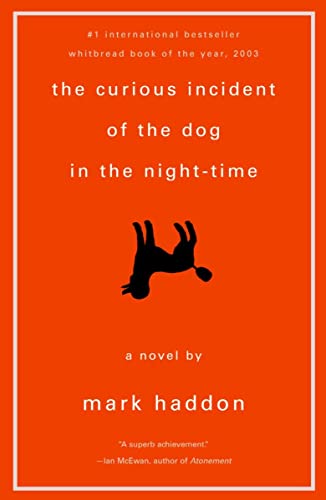
The other book is The Curious Incident of The Dog In The Night-Time by Mark Haddon, about Christopher John Francis Boone, another autistic boy who discovers the neighbor’s dog impaled by a garden fork. Despite being considered the prime suspect, he sets out to investigate the canine’s murder.


I’ve read both novels and feel they do a good job of staying entrenched in the world of a first-person literary novel while incorporating elements of said detective story. The same could be said for House Rules Written by Jodi Piccoult. Though in most cases, I lean toward the latter myself. In terms of the fiction, I’ve been reading a collection of stories by sci-fi/fantasy author Ray Bradbury, also read similar volumes by legendary mystery authors Dashiell Hammett, Raymond Chandler, and James M. Cain. While I can’t speak for other disabled readers and their feelings on these matters, embracing more disabled narratives and placing them in a genre context might be taking several steps forward.

 For the most part, disabled narratives are either of a first-person literary or non-fiction nature. But as a reader, I want to see more risks taken with this subject matter. A broader crime/mystery/detective or sci-fi/fantasy/horror story involving a disabled character, whether he or she is a main or supporting player. Even better if such were a series detailing one’s ongoing ordeals within these settings. Yet even readers know it takes a lot of skill and craft to balance the realistic struggle of said character with a more imaginative genre scenario, and consistent on sequential basis. Though such is not impossible and could work very well.


It’s one thing to read about one’s struggles being recounted in first-person, whether it be factual or fictionalized. You’re being told this individual’s story. Yet when placed in a genre context, the author shows you their ordeal, whether it be a crime/detective/mystery story or a sci-fi/fantasy/horror tale. You’re learning a broader social message which their life or perspective tries to convey. Yet it remains up to the reader to decode the fiction from the more concealed portion of the author’s life. Odds are, this would be a worthwhile reading journey and enable these observers to think for themselves.


While these ideas may be ahead of the curve, a first person literary or non-fiction story might be too confining. A genre story or series with disabled character front and center, or with regular involvement in the stories broadens the profile and understanding of these people and their issues. It would be great to see such a thing come to pass sooner or later.


(Note from Lois and Anastasia: The Maid by Nita Prose is a cozy mystery with an autistic amateur sleuth.)

Wednesday, June 29, 2022

JUSTIN MURPHY ON THE RELATIONSHIP BETWEEN READERS AND CHARACTERS IN THE BOOKS THEY READ

Today we welcome back Justin Murphy. In both his fiction and nonfiction, Justin explores many themes in his work, including probing into the darkness of pure evil and exploring obscure figures often forgotten in entertainment. Today he talks about the relationship between readers and the characters they’re drawn to. Learn more about Justin and his books at his Facebook Author Page.  

Readers Want Characters Who Are Both Personal and Universal

There are old adages many of us have heard time and time again, that we want to read about characters we can ’’relate to’’ or ’’identify with.’’ Yet psychoanalyst Carl Jung also once said, ’’What is most personal is most universal,’’ and this adds a deeper layer. In such cases, it refers to those of us who read books and explore characters who remind us of who we are inside, or someone we know. This works two ways, as writers project something from their personal lives into their fiction, and readers find even the smallest detail connects with an aspect of their ordeals. Five examples of these come to mind.


Jean Louise ’’Scout’’ Finch in To Kill A Mockingbird is a little girl in 1930’s Alabama where racial tensions are no secret. Her father Atticus is an attorney who must defend Tom Robinson, an African American, accused of raping and beating eighteen-year-old Mayella Ewell. It’s based on author Harper Lee’s childhood and her relationship with her father, a real-life lawyer defending a man in a similar case, in the same period and region. Yet the book resonated with readers due to the 1960’s Civil Rights Movement and worsening racial tensions down South.


Another is Douglas Spaulding from Dandelion Wine, who sees his native Green Town, Illinois as a very magical place. Despite being lumped into the genre of science fiction, many young boys of the 1950’s who read this also viewed their upbringing in this way. A wistful nostalgia, if not an imaginative place, in contrast to the harsh realities they later discovered in adulthood. Author Ray Bradbury himself felt this way about his birthplace Waukeagan, Illnois where he spent his formative years. 


Despite his reputation in the horror genre, Stephen King also provides a few examples of these. In his novella, The Body, he focuses on the journey of four adolescent boys as they set out to find, you guessed it, a dead body. Many readers had the same ordeals as these kids, such as having similar friends or confronting bullies. With their adult lives taking very different directions. His epic novel IT and the story “Sometimes They Come Back” are more extreme examples of this. 


Keep in mind, these characters were from 1950’s Maine towns, such as Castle Rock and Derry. So was Stephen King. In fact the incident with the dead body being hit by a train turned out to be based on one he witnessed as a small child. It is believed the future horror author came home so traumatized he remembered nothing, and his mother relayed to him what someone explained to her. 


As for adulthood, King provides a couple examples of this as well. The characters Jack Torrance from The Shining and Dr. Louis Creed of Pet Sematary prove to be symbols of this latter stage in life. The former is a recovering alcoholic reeling from an abusive childhood at the hands of his father. Later projecting said abuse onto his son Danny and becomes the seasonal caretaker at The Overlook Hotel. The supernatural happenings at this locale submerge him once more in the alcoholism and abuse he tried to steer himself and his family away from. What readers haven’t gone through some sort of family dysfunction or got absorbed into their own personal hell? Stephen King later admitted his own alcohol and drug issues and at one point being a little too “hands on’’ with his kids.


Dr. Louis Creed, of the latter novel, faces death in three ways. The hit and run accident involving his daughter Ellie’s cat Church, a similar incident killing his baby son Gage, and his wife Rachel’s murder at the end. He buries each of them in an Indian burial ground, but they return with disastrous and zombifying results. 


Readers deal with this every day. Who hasn’t lost a beloved pet, a child too young, or a spouse after so many years? There are moments they wish to bring them back but realize this is living in the past and are better off moving on.


I’ve drafted, revised, and edited a yet to be released series of novellas entitled The Alana Harrell Mysteries about a single mother investigating missing child cases while dealing with her two special needs sons. Writing these to show how single mothers struggle balancing work and family, letting both them and disabled readers know they are not alone. I was raised by a single mother caring for me with my mild case of Cerebral Palsy and my autistic brother.

Friday, October 15, 2021

BOOK CLUB FRIDAY--AUTHOR JUSTIN MURPHY PRESENTS AN UNSUNG HERO OF MARVEL COMICS

Whether fiction or nonfiction, Justin Murphy explores many themes in his work, including probing into the darkness of pure evil and exploring obscure figures often forgotten in entertainment. Today he returns to tell us about his latest unsung hero, Jack Kirby. Learn more about Justin and his books at his Facebook Author Page.  

Like the first release of my Unsung Hero series covering the life and career of forgotten Star Trek writer Gene L. Coon, another installment focuses on Marvel co-creator Jack Kirby. Stan Lee spent decades promoting himself as the face of the comic book publisher, later to be a Disney owned Film and TV juggernaut. Yet Kirby was the workhorse who developed most of these beloved characters, based on Lee’s initial concepts.


His first well known creation on the brink of World War II resulted in a patriotic hero named Captain America. Published by Marvel’s earliest forerunner, Timely Comics. Co-created with Joe Simon, the superhero openly fought Nazis, including the villain Red Skull. It sold one million copies and paved the way for the two creators to have much success writing and drawing comics well into the 1950s.


Kirby drew and developed characters for Marvel and its then more well-known competitor, DC Comics. In fact, some instances of work for the former outlet were retools of titles he worked on at the latter. Such examples would include creating different interpretations of Thor for both publishers. Along with redressing DC’s Challengers of The Unknown as Marvel’s The Fantastic Four.


In fact, he drew and developed a concept for an early version of Spider-Man. Though Stan Lee derided his version as ’’Captain America with cobwebs.’’ It later got turned over to horror and suspense comic artist Steve Ditko, who retooled the character into a teenager with a lean, more human-like bone structure. Kirby wrote characters named ’’Peter Parker’’ and ’’Peter Parr’’ for decades prior to Ditko’s finalization of him as the friendly neighborhood web slinger. Yet felt the latter deserved most of the credit. However, two groups of superheroes cemented his legacy with Marvel. September 1963 saw the release of both to the comic book world.


One formed a team of established superheroes, Thor and Captain America and such characters as Iron Man, The Hulk, and Ant-Man. Considered ’’Earth’s Mightiest Heroes’’, they joined forces to fight many of Marvel’s greatest villains in a manner similar to DC’s Justice League of America, the competitor’s top selling title. The Avengers were designed as Marvel’s way to combat this. Decades later, they formed the nucleus of Disney’s Marvel Cinematic Universe and now outshine the competition on all media fronts.


The other group in question were also formulated to compete with DC’s Justice League but in a much different way. Kirby created a new batch of characters with special abilities. None of them were affected by gamma rays or bitten by a radioactive spider; they were born mutants. Led by Professor Charles Xavier, they were a group Stan Lee and Jack Kirby named The X-Men. The artist got involved with creating the original five superheroes, Cyclops, Jean Grey (originally Marvel Girl), The Beast, Archangel, and Iceman. This initial batch didn’t prove as successful as later versions but paved the way for such heroes as Wolverine.


Jack Kirby died in 1994, but his legacy is felt with film and TV adaptations of the above comics.


Jack Kirby

The Unsung Hero of Marvel


Many recognize Stan Lee as the face of Marvel. Yet Jack Kirby is the one who did a lot of the hard work in creating such heroes as Captain America, Iron Man, Thor, The Incredible Hulk, and Ant-Man. While Lee was the public face for what became the multimedia brand, Kirby’s legacy is relegated to the shadows. Much like Bill Finger of Batman and Gene L. Coon of Star Trek, this man doesn’t get enough credit. A man who gave everything to the comic book industry. This book hopes to shed some light on his life and career. 


Buy Links

ebook 

audiobook 

Thursday, May 27, 2021

BOOKCLUB FRIDAY--AN INTERVIEW WITH AUTHOR JUSTIN MURPHY

Today we sit down for a chat with author Justin Murphy who writes Southern crime fiction, true crime, and biographies of often forgotten figures in the entertainment industry. Learn more about Justin and his books from his Facebook page. 

When did you realize you wanted to write novels? 

I was always a bit creative, and people told me I had an imagination. But on my fifteenth birthday, the feeling hit me like an ocean wave. It’s the moment I realized this was what I wanted to do. Within a couple months, I began writing short stories in a more serious pursuit. More or less haven’t looked back since.


How long did it take you to realize your dream of publication?

About four years from that moment. My first book, Dothan, released by the now defunct Epstein Publishing on December 10, 2004.


Are you traditionally published, indie published, or a hybrid author?

Indie to some extent. My first few books were published through Epstein Publishing and Aspen Mountain Press. But most of my books now are \self-published.


Where do you write?

For many years, I wrote on my PC in the family room at my home. Now I write on a laptop at the state and national parks we travel to.


Is silence golden, or do you need music to write by? What kind?

Fairly quiet, but I have no problem writing with the TV on or listening to my brother’s chatter (he’s autistic) as long as things aren’t too loud. I like classic rock and R&B/Soul/Motown, but I usually don’t associate them with writing.


How much of your plots and characters are drawn from real life? From your life in particular?

Early on, there were characters based on people I knew or stories featuring places I lived. That tapered off for several years. In the last few years, I’ve delved into more material about disability. Writing manuscripts focusing on my ordeals with Cerebral Palsy and my brother’s autism. I’ve even worked the latter into a supernatural horror story.


I’ve since combined aspects of these with a short story I wrote for a contes and revised as a series of detective stories. I’ve also revised a heist caper tied to disability and wrote an aftermath story. I haven’t published any of these yet. I’m still working on them. And they’re also very personal.


Describe your process for naming your character?

For years, the character’s name was the last thing to come to mind when creating a story.


With these recent stories, I’m fascinated with certain last names for characters like ’’Collins’’, ’’Harrell’’, and ’’McClaren’’. I gave a pair of sisters female variants of boy names. I’ve named some of characters after family members and people I knew. But it comes down to the name being right for the character.


Real settings or fictional towns?

I have used fictional towns before to avoid any negative reactions, but mostly they’re real.


What’s the quirkiest quirk one of your characters has?

In some of my detective stories there’s a character based on my brother. Due to his autism, his family doesn’t understand him. He’s not the most verbal but is kind and slowly learns new things. On some level, his family also learns from him and learns to love him.


What’s your quirkiest quirk?

There are times where I’m not the most attentive and am easily distracted.


Everyone at some point wishes for a do-over. What’s yours?

I wish I’d learned some things about writing a decade or more sooner.


What’s your biggest pet peeve?

People and life in general…lol.


You’re stranded on a deserted island. What are your three must-haves?

My brother, Fleetwood Mac’s Mystery To Me, and Dandelion Wine by Ray Bradbury.


What was the worst job you’ve ever held?

I don’t know about the worst job, but I remember my worst period as a writer, so far. Around 2012-2013, I signed with a Film/TV Agent to get screenwriting work. Was assigned to write five screenplays, which I did. Nothing happened and she was gone within a year. At the same time, I popped out a series of short Kindle books in quick succession.


The combination of the two really burned me out and took me a few years to begin coming out of that slump.


What’s the best book you’ve ever read?

Part of me wants to say Dandelion Wine by Ray Bradbury. After years of reading entertaining stories, this book taught me to pay more attention to wording and sentence structure. Try not to use the same word twice in a paragraph. Along with how developed the characters and settings were. It inspired me to write poems.


Ocean or mountains?

For now, I’ve been going to a few lakes and ponds at the state parks we’ve been to. I plan to see some mountains when we get to Yellowstone. Sooner or later, maybe both?


City girl/guy or country girl/guy?

A question beaten to death by relatives from my native Dothan, Alabama. City people are stereotyped as being ambitious, extroverted, and more than a tad selfish. While country types are pegged as content and introverted but very dim witted. My reality is the rural contentment with some ambition.


What’s on the horizon for you?

There’s still some things I want to work on with heist capers and crime stories involving disability. Also, continuing with photography and visiting the state and national parks. 


Anything else you’d like to tell us about yourself and/or your books?

I hope to be creative for as long as possible. I’ve been writing and publishing for a long time. The road has been bumpy and will get more so as time goes on. But it’s worth it. You have to reach within yourself to see what your’re truly capable of.


Gene L. Coon: The Unsung Hero of Star Trek:

Gene Roddenberry has long been painted as the visionary who made Star Trek possible. Yet not much has been written on Gene L. Coon, the real workhorse behind the original series. This man built the universe around Roddenberry’s initial concept we all know today. He almost single handedly created the Klingons and had a hand in creating the franchise’s greatest villain…KHAN! Any notion of Starfleet Command, The United Federation of Planets, warp technology, and its fictional creator Zefram Cochrane all belong to him. Coon died from cancer at forty-nine, just as Star Trek got popular through reruns and conventions.


Buy Links

ebook 

audiobook 

Thursday, April 29, 2021

BOOK CLUB FRIDAY--AUTHOR JUSTIN MURPHY WRITES ABOUT AN UNSUNG HERO OF THE ORIGINAL STAR TREK SERIES

Whether fiction or nonfiction, Justin Murphy explores many themes in his work, including probing into the darkness of pure evil and exploring obscure figures often forgotten in entertainment, such as Gene L. Coon, an ex-marine, pharmacist, journalist, and the unsung hero of the original Star Trek franchise. Learn more about Justin and his books at his Facebook Author Page. 

I wrote a full-length biography of forgotten Star Trek writer-producer Gene L. Coon, a man who has been obscured in the franchise’s history. While many extoll the virtues of Gene Roddenberry and his, “vision of the future’’, Coon is the man who created the nuts and bolts of the fictional universe we see today. 


To be fair, Gene Roddenberry and his associate producer John D.F. Black brought Star Trek’s initial concept to the screen. Yet many of the ideas didn’t take. Despite taking inspiration from Horatio Hornblower sea adventure tales, Westerns like Wagon Train, and the unaired pilot, “The Cage”, which resembled the classic sci-fi film Forbidden Planet, the first ten or so episodes were without much depth. Many of these featured supernatural beings of the week, mad scientists, and a space virus. However, one episode did introduce the Romulans.


Coon took over as writer-producer midway through Season 1. He first nixed a failing romance storyline between Captain James T. Kirk and Yeoman Janice Rand. He incorporated the more humanistic elements, such as giving villains a sense of dignity despite the terrible things they do. Displaying this in the Klingons in’’Errand of Mercy’’ and in Khan (co-created with Carey Wilber) in ’’Space Seed’’. He also reversed the role of the typical monster of the week by showing how humans harmed them and commented on the futility of war as in ’’A Taste of Armageddon’’. He expanded the concept of warp technology and created greater interaction between the three lead crew members with the level-headed Kirk settling arguments between the logical Mr. Spock and the emotion Dr. McCoy.


I’d heard of Coon over the years but noticed there wasn’t much written about him. My research involved combing newspaper archives such as The Los Angeles Times and The Beatrice Daily Sun, his hometown periodical. This is where I found details of his earlier life, including his stint singing on an Omaha, Nebraska radio station at the age of four. Along with his career as a pharmacist, trained during his Marine service in Korea, he also freelanced as a reporter, covering atomic bomb tests in Yucca Flats, Nevada.


Coon died on July 8, 1973, a year after Star Trek first became profitable in syndication and on the convention circuit. For many years, his name didn’t even get a mention until William Shatner’s memoir Star Trek Memoriescame out in 1993 in which he dedicated an entire chapter to Coon and his accomplishments on the series. Leonard Nimoy corroborated these claims is in his own 1995 tell-all I Am Spock, as did many behind the scenes personnel such as Herbert F. Solow and Robert H. Justman in Star Trek: The Real Story.


Coon was an amazing man who had much to do with what Star Trek became. Yet his premature death from throat and lung cancer and Gene Roddenberry’s self-promotion as the sole creator of Star Trek did much to conceal Coon’s legacy from the public. Gene L. Coon has only a few living relatives, and none of them receive royalties.


I’ve received both positive and negative feedback on the book in the few years since its release. Would also like to thank actor Jack Nolan for narrating the audiobook. My hope is those read or listen to the book will be enriched by the legacy Gene L. Coon left behind. So much of it belongs to him, despite his lack of recognition. Roddenberry was far from the only, ’’Great Bird of The Galaxy’’. It’s the story of a man who left behind a great body of work yet doesn’t get a lot of his due credit.


Gene L. Coon: The Unsung Hero of Star Trek:

Gene Roddenberry has long been painted as the visionary who made Star Trek possible. Yet not much has been written on Gene L. Coon, the real workhorse behind the original series. This man built the universe around Roddenberry’s initial concept we all know today. He almost single handedly created the Klingons and had a hand in creating the franchise’s greatest villain…KHAN! Any notion of Starfleet Command, The United Federation of Planets, warp technology, and its fictional creator Zefram Cochrane all belong to him. Coon died from cancer at forty-nine, just as Star Trek got popular through reruns and conventions.


Buy Links

ebook 

audiobook