Featuring guest authors; crafting tips and projects; recipes from food editor and sleuthing sidekick Cloris McWerther; and decorating, travel, fashion, health, beauty, and finance tips from the rest of the American Woman editors.

Note: This site uses Amazon affiliate links. As an Amazon Associate, I earn from qualifying purchases.
Showing posts with label European vacations. Show all posts

Wednesday, March 1, 2017

#TRAVEL TO ENGLAND'S CHANNEL COAST WITH GUEST AUTHOR KAREN McCULLOUGH

Hythe, Kent
Award-winning author Karen McCullough is the author of more than a dozen mystery, romantic suspense, and fantasy novels. Her short fiction has appeared in several anthologies and numerous small press publications in the fantasy, science fiction, and romance genres. Learn more about her and her books at her website and blog.

A Visit to England’s Channel Coast

Having part of my family – my son, his wife, and two children – living across the ocean from me in England can be hard. I haven’t been able to be there to help when the children were born, nor can I manage to be there for all the developmental milestones, birthdays, special events, or when they need extra help due to illness or work crises. Still I’m grateful to live in this century when pictures and videos make it easier to keep up with them, and Facetime lets me even watch the children at play and talk face to face with them.

The flip side of the coin is that I have a great excuse for travel abroad.  It’s given us the opportunity to visit several places in that country and others in Europe. In 2015 we met them in Rome and did some travel around Italy.

Late last summer they had a second child, which limits their ability to travel for a bit, but we did have the good fortune to visit them in the town where my daughter-in-law grew up.

Hythe is a lovely town on the Channel coast in Kent, just southwest of Dover and Folkestone, on the northeastern edge of Romney Marsh. It has a beautiful shingle beach (stones, not sand) with a popular seafront promenade. On very clear days you can see the coast of France across the channel.

It’s an old town as well, with some buildings dating back to the Middle Ages, though most of the structures in the main part of town are a combination of eighteenth, nineteenth, and twentieth century vintage. But behind their antique facades, many of the buildings have been modernized and are still in use today. The main street is narrow but gets heavy traffic, except during the times when it’s blocked off to automobiles and the road becomes a pedestrian walkway.
Hither Hotel and Beach
It's not a very touristy place, which makes is a delight to visit, but it does have some features that make it well worth a visit, including a really magnificent hotel on the shore, the Hythe Grand Imperial. We had a chocolate tea there that was to die for!

The High street is lined with a variety of shops, teahouses, restaurants, and there’s even an antique mall. You can easily spend a day just browsing all the charity shops, the bookstore, the bakery, fruit and veg stalls, and have lunch or tea and cake at one of several lovely places.

A park with boats to rent and plenty of room for the kids to run around and play surrounds the old military canal that runs through the town. Or walk along the promenade from the hotel to the end where a tiny seafood restaurant serves some of the best fish and chips around, or better yet, have a scallop roll that will leave you dazed with delight.

Hythe is just two rail stops away from Dover, site of the famous ferry landing and of Dover Castle. The castle, which dates originally from the Middle Ages, is worth allotting an entire day. The main keep features displays of castle life in the fourteenth century, and the roof of the keep offers a panoramic view of the countryside, but the tunnels underneath were used extensively during World War II and the displays there range from fascinating to downright creepy. Also on the grounds are the ruins of an old Roman lighthouse and a chapel. We packed a picnic lunch, but there is a café on the grounds along with the inevitable gift shop.
Romney-Hythe-Dymchurch Light Rail 
A final attraction in Hythe is the Romney-Hythe-Dymchurch light rail line. Several times a day small coal-fired steam engines pull streams of passenger cars along a 14-mile light rail from Hythe to Dungeness. There’s very little in Dungeness other than a nuclear power plant, two lighthouses (an old one and a new electric one), a couple of gift shops, a few scattered old cottages painted matte black, and the shack Marconi built back around the turn of the last century to test out his radio. But it features an astonishingly strange and bleak landscape of shingle covering acres of coastline that is worth the journey all by itself. I could write another entire post on the rail line and Dungeness.

How does all of this tie into my books?  It doesn’t, really. But there is inspiration for any number of stories here and someday I’ll write one.

In the meantime, my latest release, Hunter’s Quest, is set in the Blue Ridge Mountains of North Carolina.

Hunter’s Quest
Kristie Sandford's vacation is interrupted when a man jumps out in front of her car. She avoids hitting him, but when she stops to see if he's hurt, he demands she help him escape from the people chasing him. Kristie has an odd "gift" - she occasionally gets warning messages, and she gets one saying he needs her help or he'll die.

Jason Hunter is an NC SBI (North Carolina State Bureau of Investigation) agent working on his own time searching for a friend, an investigative reporter who disappeared while tracking down rumors of corruption in the bureaucracy of a small mountain town. Jason is grateful to Kristie for rescuing him, but dubious when she insists she has to continue helping him.

Kristie is attracted to Jason, but the edge of danger she senses in him reminds her too much of the abusive family she escaped as soon as she could. Still, the message said he'd die if she didn't help him, and the messages have been right before.

Wednesday, February 22, 2017

#TRAVEL TO VENICE, ITALY WITH GUEST AUTHOR JOANIE MacNEIL

One of the many ships that cruised by our hotel
via the 
Canale di San Marco
Australian romance author, Joanie MacNeil, writes short contemporary romances: a blend of sweet, sexy, heart-warming stories about new love and second chances.  One of her favorite pastimes is travelling with her own romantic hero. Learn more about Joanie and her books at her website.

Venice, Italy, October 2013
I had been to Venice before, very briefly, visiting the usual tourist attractions: a glass-blowing demonstration at the Murano Glass Factory where the beautiful, intricate designs of the softly coloured chandeliers were like nothing I’d ever seen before. Other attractions: St. Mark’s Square and the magnificent Basilica di San Marco; the Doges’ Palace and Bridge of Sighs; also to be enjoyed, a gondola ride complete with serenade along the Grand Canal and into the hidden waterways that wind through the city. Across the water, the conversation and laughter of the gondoliers echoed in the narrow passages, adding to the atmosphere.

This time, we arrived in Venice via a coach tour from Zagreb through Croatia, Bosnia-Herzegovina, Slovenia and the Dalmatian coast. In Venice we did all those touristy things again as part of the coach tour. Our accommodation for two nights was in a monastery converted to a hotel, on the opposite side of the Great Basin to St. Mark’s Square.

The Basin is the body of water where the Grand Canal and Canale della Giudecca flow into Canale di San Marco. On stepping out of the hotel on the first morning, we were mesmerized by the sight of an enormous cruise ship making its way down the Canale della Giudecca. For a moment, the ship appeared to be coming straight at us before following the slight curve in the canal, through the Great Basin and out to sea. Little did we know that watching these ships come and go would become a bit addictive. The stateliness of the modern cruise ships against the grandeur of the ancient Venetian architecture was a sight to behold.

Once we’d left the tour, we transferred to another hotel about a 10-minute walk from St. Mark’s Square, a good choice as our room overlooked the sparkling aqua-blue waters of the Great Basin. This hotel had its own private dock at the back door, which made for a very easy transfer via water taxi. We spent a week in Venice, and each time we walked from our hotel to the busy tourist area, and back again at the end of the day, we battled through the constant crowds over the many small bridges spanning the canals.

I had been to the Rialto Bridge on my previous visit, and wanted to take my husband there. On our daily explorations, we wandered around the narrow streets, taking in the sights and sounds, getting side-tracked and finding interesting eateries and shops, and along the way discovering lovely little courtyards tucked away in quiet areas. We did find the bridge, worth the walk through the narrow crowded maze.
A peaceful place to sit and dream in Venice, Italy 
On the last day, we had time to spare before the water taxi took us to our cruise ship. We wandered in the opposite direction away from the tourist areas and found ourselves in a quiet residential area surrounding a lovely big park, lots of tall trees, and beautiful homes. A pleasant place to sit and relax away from the tourist hubbub. The naval training college, off limits to all but naval personnel, is located beyond the residential area at the end of the island.

One of the highlights of our stay was watching the cruise ships glide past our hotel window, four within 90 minutes on one occasion, on their way out to sea. We would lean out of the window and reach out, feeling that we could almost touch them. An amazing sight. One day as we sat by the water having lunch, we were thrilled to see the ship we were to board next day glide past us on its way to the dock. Probably the fact that the upcoming cruise was my first added to the excitement.

The major waterways of Venice are so cluttered with water taxis, barges, and a range of other craft in between, some such tiny boats. To see the cruise ships amongst much smaller craft dotting and criss-crossing across the basin is a remarkable, if not a breath-holding sight.

We were due to leave Venice at 1.00am, and made the effort to be on deck so that we could see the city by night. I anticipated lots of pretty lights showcasing the pathways and the intrigue of the city itself, but instead, there were few lights, and Venice on the whole was in darkness.

As we waved our goodbyes to Venice, we looked forward to our cruise around the Mediterranean and the new places we’d visit.

Desperate and Dateless
Neither Zoe O’Malley nor Liam Reynolds consider themselves desperate or dateless, but fate intervenes when each independently receives a ticket to the Desperate and Dateless Ball and their lives become irretrievably entangled. Can they live by their golden rule—never mix business with pleasure?

Wednesday, February 17, 2016

#TRAVEL TO REAL-LIFE GAME OF THRONES LOCATIONS

Castle Ward, Northern Ireland
photo by Ardfern
Jason Biondo is an amateur bodybuilder and a travel junkie who loves to share insightful tips to his fellow health enthusiasts and travelers. He is also a User Interface Developer Consultant and the Founder of Trekeffect. 

9 Breathtaking Real-Life Game of Thrones Locations

Game of Thrones is a phenomenon in the television industry and as far as its ratings are concerned, there are no signs of it slowing down. If you’re wondering where on earth to find the majestic places where the show is filmed, here are the answers.

Castle Ward, Northern Ireland – Winterfell’s Courtyard
The Castle Ward was featured as Winterfell’s courtyard and was used for the scene where King Robert arrived at Winterfell in which they were met by the house of Stark during the first episode. This historic farmyard is a unique 18th century mansion that is famous for its dazzling mix of architectural polishes. It is located on a rolling hillside overlooking the waters of Strangford Lough, Downpatrick. Because of the fame brought about by the television series, the place is now visited daily by many tourists. Game of Thrones tours are widely offered.

City of Dubrovnik, Croatia – King’s Landing
Dubrovnik is the main filming location for the scenes in South of Westeros or primarily the King’s Landing during the second season of the show. As most GOT fans know, this city showcases red-tiled roofs with orange terracotta tiles, large historic stone walls and scenic narrow streets as well as the wild seas. Known as the Pearl of the Adriatic, Dubrovnik is truly one of the most historic and fabulous places along the Adriatic Sea.
Lovrijenac Fortress, Dubrovnik, Croatia
Lovrijenac Fortress, Croatia – The Red Keep
Another well-known place is the Red Keep – a place where kings and queens of Westeros rule the Seven Kingdoms. In real-life, this GOT place was filmed in the Fort Lovrjenac, which is also within the city of Dubrovnik. Also known as the Fort of St. Lawrence, it is located outside high walls that are over 50 meters thick to prevent its destruction by enemies. Visitors can climb the 175 stone steps to the impressive beacon to catch a glimpse of the city’s skyline.

Minceta Tower, Croatia – The House of the Undying
Built in 1913 as the highest quadrilateral fort, it is the highest part of Dubrovnik’s walls and gives a magnificent overview of the city. Minceta is often referred to as the most remarkable fort of the city and regarded as the symbol of the place. The scene where Daenerys Targaryen walks around the exterior and has to face unexpected visions in the House of Undying in order to gain knowledge about her future was shot here.
Done Castle, Scotland
photo by Steve Collis
Doune Castle, Scotland – Winterfell
This was the filming location of the show’s pilot episode where the interior served as the festivity area when the royal party arrived. The background of the castle was also used for many scenes in the Winterfell. The castle was rebuilt during the 14th century and served as a hunting lodge for Scottish royalty in the earlier years as well as a house for a widowed queen.

Azure Window, Malta – Wedding Scene
Located on Gozo Island, this natural limestone arch in the sea cliff was seen during Daenerys and Khal Drogo’s wedding. Even before the scene was shown on TV, it had been known as one of the most visited tourist destinations in Malta. Unfortunately, recent reports have suggested that it will collapse in the next few years because the sea is slowly eroding the arch. There are danger signs posted all over the arch.  However, people ignore them to walk across and head to the top for a stunning picture of this well-known place.

Fort Saint Angelo, Malta – The Red Keep Dungeon
Located at the hearth of Grand Harbour (which was used as a military habitation), this prehistoric structure was used by British soldiers and was severely damaged during World War II. The tunnels were used for the scene where Arya was chasing a cat as an assignment from Syrio Forel wherein she overheard a discussion about the possibility of a war.
Dina City Gate, Malta
photo by GFDL
 
Mdina City Gate, Malta – King’s Landing
This was originally the main setting of Game of Thrones, particularly on the first season, but because of logistics issue, it was later replaced by Dubrovnik. It is the old capital of Malta and one of the island’s oldest, strategically located walled cities.  Mdina’s inland setting, red-stoned buildings, and tall gates were the perfect shooting location for the show.

Dark Hedges in Ballymoney, Northern Ireland – Kingsroad
The stunning view of beech trees that were perfectly aligned at the side of the streets is the location for the scene when Arya Stark escaped King’s Landing disguised as a young boy. It is considered the longest highway in the Seven Kingdoms, running from King’s Landing to the wall where Arya Stark rides for Castle Black. In real life, the Dark Hedges was created to impress visitors as they approached the entrance to Georgian Mansion. After a couple of centuries, the trees still retain their magnificence and have become one of the most photographed natural sights in Northern Ireland. 

Wednesday, January 7, 2015

#TRAVEL WITH SERENA--GUEST AUTHOR LYNN CRAIN ON LIVING IN VIENNA

Map of old Vienna
Lynn Crain makes a return visit today to tell us more about the beautiful city of Vienna, Austria, how she’s faring so far away from home, and the impact it has on her as a writer. Lynn lives the dream by writing books of various genres but all with a touch of romance. Her latest adventure has taken her to Vienna, Austria with her husband as he works at his dream job. Learn more about Lynn at her website and her A Writer In Vienna blog

My Daily Adventure

I have lived 40 months in the beautiful city of Vienna, Austria. I can see some of you may be pea green with envy, but some days it’s not all it’s cracked up to be. As a young girl, I always wanted to live in faraway places and explore new territory. For that young girl, this is definitely a dream come true.

Winter in Vienna
However, there is one thing that people don’t realize when it comes to living somewhere that people consider special. Believe me, I know. My US home is in southern Nevada and just over the hill is the famed Las Vegas. There are people who are positively giddy that I live there while I’m kind of confused by the whole thing. The fact is that no matter where you live, it’s just a place to hang your hat, wash your clothes, and buy your food.

Sure, I now have 10-foot ceilings that would cost me an arm and a leg in the states. I can look right outside my window and see a castle or two. If I walk down the street, I can go inside one of the coolest Baroque churches ever seen. And while it thrills me on most days, it has now become the norm to me. I walk outside every day and hear the traffic, see the Strassenbahn or street train in its familiar red and white motif, as well as watch the people walk everywhere. We walk everywhere, too, because there is no reason to have a car in this city. And while on most days, I love the walks, there are times where walking can be tough. Like when the dear husband has been traveling on business and that means I get to walk Pup Harry three times a day, rain or shine. Need I say there have been times when it was more rain than shine and for this desert rat, I nearly drowned. Seriously. And to be honest, same goes for the snow. I won’t drown then, but my teeth definitely rattle.

Then there’s the building I live in. Built in 1867, it is a very interesting place. We have two bedrooms and office, a huge living room and a dining room. We have one full bathroom, one water closet and one bath with a sink and tub. Our kitchen is really small but huge by the standards of the area. The normal refrigerator here only holds three to four days worth of food for a family of four. On rainy days, the Internet is in control and there are moments when my lifeline to the rest of the world is on vacation.

When I came here, I didn’t know too much about the city, so I decided to write a series to learn more. The first book in that series, A Viennese Christmas, takes place during the fabulously, wonderful season. I absolutely love it here during that time and wouldn’t trade it for anywhere. You have the Christkindlemarkts, some of which are very traditional, while others are a combo of traditional and modern, but all are Christmas markets designed to pull you into the season. There are traditional winter drinks, food galore, and just about every gift idea one can think of.

Then there is so much to do here as well. Last holiday season, my husband and I decided to do a museum every weekend until we had visited as many as we could. We did that up until July of this year when we got museumed-out by having guests here. We went to four in a week. So we’ve decided to change it up a little with a museum one week then the next, a nice long walk. I love to do both of those. A lot.

I often wonder just how this city looked hundreds of years ago, and though I do see pictures and maps, I get the feeling it was something to behold. I love looking at the castles, the churches, the roads and even the old Roman ruins, knowing that I am treading the same spots as thousands, if not millions of people, have walked. So yes, there are ways that I am excited every day to be here and the writer in me sees a story at every turn.

Yet, each of you can find a story in your very own hometown. There is always something happening there, and you don’t need to have a castle outside your window to enjoy it. Even though I am far away from home, I have learned to look out the window, count my blessings, and look with the jaded eye of a writer who always asks ‘what if?’

A Viennese Christmas, A Taste of Vienna--Book 1
Sign language interpreter, Amanda Kranz, wants to find her soul mate but fears her chance has past due to the death of her childhood sweetheart. Finding sexy historian Henry Jager during an outing in her new home of Vienna, Austria, may have been a stroke of luck. When his ex-fiancée shows up just as their relationship starts to sizzle, Amanda must decide if standing up for what she really wants will give her lifetime happiness. Or will she be destined to spend her life alone?
           

Wednesday, October 2, 2013

TRAVEL WITH SERENA--AUTHOR RAYNE GOLAY ON GENEVA, SWITZERLAND


Geneva the Beautiful

Author Rayne E. Golay was born in Helsinki, Finland. She holds a Masters degree in psychology. After moving to Geneva, Switzerland, she worked in a multi-national company as drug and alcohol counselor. She took early retirement to write full time. Her first novel Life is a Foreign Language is about love in the afternoon of life. The Wooden Chair is her second novel. Nowadays, she lives in Southwest Florida, busy marketing, blogging, and editing her third book. Learn more about Rayne at her website.

About half of Leini’s story in The Wooden Chair takes place in Geneva. Thank you for the chance to take a tour of this city, home to me for most of my adult life. I raised my two children there, had a great career. Now when I go back to visit my children, granddaughter and dear friends, it’s as a tourist.

To rent a car in Geneva, is pointless because parking is very limited, expensive and hard to come by. It makes sense to avail myself of the free pass to public transportation most hotels give to their guests. The public transportation network in Geneva is excellent, trams and trolley buses get me to most places I want or need to go. Taxis are also affordable.

The hotel where I usually stay is right in the heart of city center, a spitting distance from L’Horloge Fleurie, The Flower Clock, and the lake. People call it Lake Geneva, but in fact it’s real name is Lac LĂ©man. It’s bordered in the north by the Jura mountain range, in the south by the Salève and France. To the north is Lausanne.

My day as a tourist starts with a renversĂ© (coffee with hot milk) and a croissant at one of the many cafĂ©s on the main street. The one I prefer is CafĂ© Martel on Rue du MarchĂ© with a variety of canapĂ©s and quiches. If I hang out at CafĂ© Martel long enough, sooner or later one or two of my friends will drop by; it’s the “in” place, any time of the day.

One street closer to the lake, on Rue du Rhone, is a panoply of the world’s luxury stores, but that will have to wait for a rainy day. Today is warm, the sun is shining, and Geneva is a city made for strolling. There are numerous lush parks with a variety of old trees. Among my favorites is Parque des Eaux Vives, a walking distance from CafĂ© Martel. I like to stroll along the quay, admire the beautiful sail boats bobbing on the waters. My sauntering takes me to the nearby Rose Park with it’s display of innumerable varieties of roses. Every June, one rose is voted the rose of the year. In fact, this tradition inspired the scene in my novel LIFE IS A FOREIGN LANGUAGE, in which Michael, my male protagonist, enters his specimen rose in a contest and goes on to win the highest nomination, Rose of Roses.

If I head back the way I came, I hop on the ferry to head over to the right bank, passage paid by my free pass. Here are some of the most luxurious hotels imaginable. I keep repeating the word “luxury,” but that’s Geneva, home of luxury. On the left bank are the luxury homes of the affluent and celebrities; on the right bank are the luxury hotels; in the city center, you have the luxury shops. On this tour of my home town, however, my next goal is the United Nations (UN), Le Palais des Nations. It’s situated in the beautiful Ariana Park with trees over a hundred years old. The city of Geneva makes the Ariana Park available to the UN for as long as UN exists. Whenever I had guests from out of town, I took them to the UN for a one hour guided tour. I have something of a weak spot for the UN and it’s history.

My stomach is growling so it must be time for lunch. The taxi drops me at Hotel Kempinski. The lift on the façade of the building affords me a splendid panoramic view of the lake, the Jet d’Eau fountain and the Mont Blanc. In the restaurant on the top floor, I ignore the proffered menu. A visit to Geneva wouldn’t be the real deal without Filets de Perches et Pomme Frittes, a local delicacy. And a glass of an open white wine, any local white will do as they usually are reliable to be palatable. No dessert for me, only an espresso.

Replete, on the quay, I wander in the direction of the Mont Blanc bridge. Weather allowing, it’s about a half hour’s brisk walk to Globus, the downtown department store. Everything in Geneva is pricy, but the wonderful perfumes, Guerlin my favorite among them, the shoes, handbags, the jewelry, in fact, everything in the store is eye candy, and that’s free. Underground, accessible by an escalator, is the most irresistible, must tempting, mouthwatering, generous display of cheeses. You can have the cakes and the ice creams and the cookies, I’ll take cheese any time. The cheese master behind the counter, shaves off a sliver of Gruyere, which melts in my mouth. He points at this cheese and that, extols their virtues, maturity, provenance. Unable to resist, I buy a piece of Tomme de Savoie, a cave-aged mild but flavorful cheese from across the border in Savoie, France. It will go well with crackers and Caesar’s Bride, a flavored tea I prefer with an afternoon snack.

This is just a quick view of Geneva, as much as I can cram into one day. For the evening, my husband joins me at Café du Centre, close by the hotel. I order moules marinieres, mussels cooked in white wine with chopped shallots, garlic and parsley with baguette to dunk. My husband has raclettes, melted Raclette cheese over boiled potatoes with pickles and pearl onions.

My plan for tomorrow is a day long tour of the lake by boat. When the weather is sunny, the wind not too stiff, it’s a wonderful way of seeing some of the little towns bordering the lake; Nyon, Rolle, Morge, then over to the French side to Evian and Hermance. The thing that strikes me at every stop, is the profusion of flowers; pansies, begonias, azaleas in window and balcony boxes, in planters on the streets and all along the quay. Wherever I turn, I’m met with pristine cleanliness and an explosion of colors.

The places I still want to visit is one of the outdoor fresh markets with great produce arranged to please the eye; the flea market where, if I’m lucky, I can get a pleasing painting, Bavaria crystal objects, all at bargain prices.

There’s so much to see and experience in this city. This is but a glimpse of Geneva the beautiful.

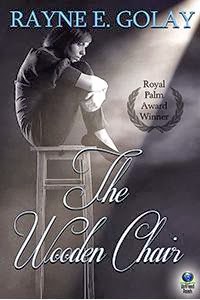
The Wooden Chair
winner of the Florida Writers Royal Palm Award
Throughout her childhood and teenage years, Leini suffers both physical and emotional abuse from her mother, Mira. Years later, married to a wonderful man, Bill, a mother herself, Leini is determined to break the pattern of abuse. With pain, she struggles through past hurts, to grow into a nurturing and loving parent and wife, a successful professional. Her victory is complete when she is able to forgive Mira.


Wednesday, September 4, 2013

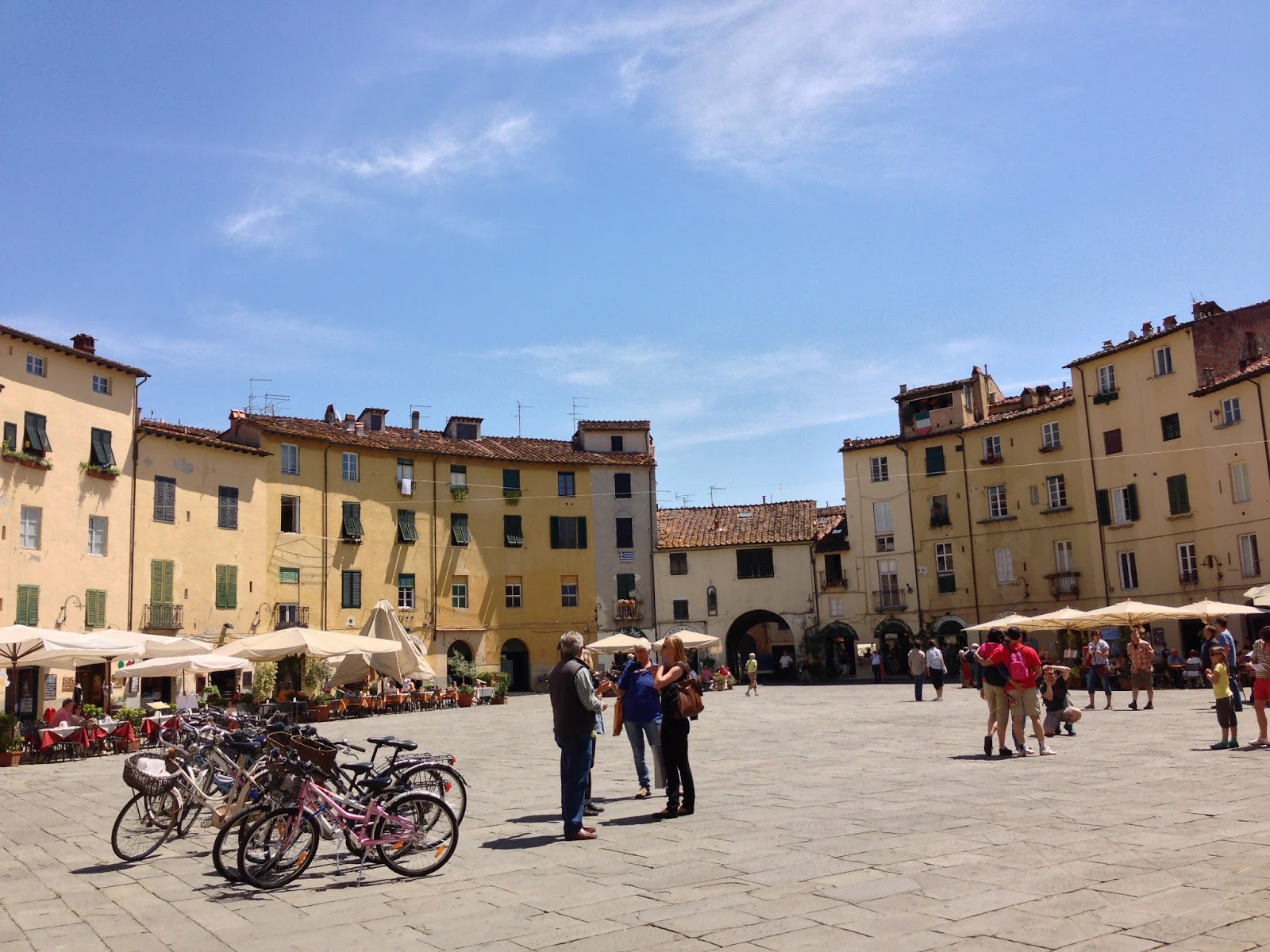
TRAVELS WITH SERENA--LUCCA, ITALY


Walls surrounding Lucca, Italy

Continuing with our European adventure this week, we travel to Lucca, Italy, first settled by the Etruscans, then colonized by the Romans in 180 BC. The forum the Romans built within the city still stands. 

Due to the unique construction of its four circles of walls surrounding the city, Lucca is the only Italian city not conquered by the Medicis of Florence.

Lucca is the birthplace of Puccini

Facade of the Church of San Michele

Church of San Michele
Lucca is a small city with a population of under 375,000, but it's known as the city of 100 churches, many dating back to medieval times. Some, like the Church of San Michele, were never completed, due to a lack of funds. Above, you can see from a side view of the church that the top third was never built, only the front facade.

Cathedral

Close-up of Cathedral exterior

Exterior of Roman Forum

Inside the walls of the Roman Forum