Featuring guest authors; crafting tips and projects; recipes from food editor and sleuthing sidekick Cloris McWerther; and decorating, travel, fashion, health, beauty, and finance tips from the rest of the American Woman editors.

Note: This site uses Amazon affiliate links. As an Amazon Associate, I earn from qualifying purchases.
Showing posts with label Judy Alter. Show all posts

Wednesday, June 7, 2023

#COOKING WITH CLORIS--AUTHOR JUDY ALTER'S NEWEST MYSTERY AND A RECIPE FOR TEXAS CAVIAR

Texas Caviar
A native of Chicago, Judy Alter has lived in Texas over fifty-five years and, in addition to four mystery series, has written award-winning fiction and nonfiction about Texas and the American West. Cooking is her avocation, and she has also written several cookbooks. Learn more about Judy and her books at her website.

A French Chef Meets a Classic Texas Recipe

Through three books in the Irene in Chicago Culinary Series, Irene Foxglove has scorned all things Texan, especially Texas foods. But now, she’s suddenly anxious to visit Texas—for Christmas, no less. Irene may not have known, but I always knew she would have to go to Henny’s home state. The lure of exploring the culture clash when a French diva meets Texas cuisine was too great. 


When TV chef and hostess Henny James leaves her show in Chicago to go home to Texas for Christmas and cater a wedding supper for her BFF from childhood, Irene volunteers to be sous chef—and brings a French delegation to Fort Worth. What follows is mayhem and murder—threatening notes, a kidnapping, nights in jail and a homeless shelter, and a runaway young couple. Saving Irene this time is a real challenge for Henny and her beloved Patrick.


To introduce her French guests—and Patrick—to Texas food, Henny takes them to a hole-in-the-wall place for authentic Mexican food, a classic barbecue joint, and a steakhouse for chicken-fried steak. Irene loves the menudo, scorns the barbecue, refuses the chicken-fried steak. But her real scorn is saved for Texas caviar, which Henny serves in lettuce cups as an appetizer at the wedding supper.


Texas caviar traces back to the 1940s when Helen Corbitt, legendary food manager at Neiman Marcus specialty stores, first moved to Texas from the East Coast. She had accepted a teaching position at the University of Texas in Austin, but she was appalled at the food she found—platters of brown fried food, soggy vegetables, and canned fruit. Perhaps she relived in her mind the question she’d asked when first offered the Texas position: Who the hell wants to go to Texas?


Within three weeks of her arrival, she was challenged to present a banquet using nothing but ingredients from Texas. Texans were—and still are—proud of their black-eyed peas, so she created Texas caviar.


Texas Caviar


Ingredients:

2 cans (approximately 20 oz each), cooked black-eyed peas

1 cup salad oil

1/4 cup wine vinegar

1 clove garlic

1/4 cup thinly sliced onion

1/2 teaspoon salt

Cracked or freshly ground black pepper 


Drain liquid from the peas. Place peas in pan or bowl, add remaining ingredients and mix thoroughly. Store in jar in refrigerator and remove garlic bud after one day. Store at least two days and up to two weeks before eating. 


The recipe later appeared in her first cookbook, The Helen Corbitt Cookbook as “Pickled Black-eyed Peas.” According to Dallas Morning News columnist Frank Tolbert, members of the Black-eyed Pea Society were “aroused” (their word) that she was not a dues-paying member of the society.


Today, some cooks embellish the caviar with corn kernels, diced tomato, diced avocado, and everything but the kitchen sink. But then it is not truly Texas caviar, and the additional ingredients hide the flavor of the pickled peas.


You can serve this with heavy-duty tortilla chips as an appetizer or as a salad, perhaps in lettuce cups as Henny did, or a side dish with your main meal. (When Henny served it at the wedding supper, Irene did not eat any.) 


Irene Deep in Texas Trouble

An Irene in Chicago Culinary Mystery, Book 4


Love and romance—and murder! 


It’s Christmas in Texas. Henny’s best friend, Charlie, is marrying the love of her life, rich and spoiled Rick Scott, and Henny will cater for the wedding supper. Irene, faux Franch chef, diva, and Henny’s one-time mentor, and Chance, Irene’s billionaire lover, are spending the holiday with Henny’s family, and Irene steps in as Henny’s sous chef. When there’s a sensational murder at the supper, Irene is the prime suspect. Murder is complicated by a kidnapping, threatening notes, and a runaway couple. Once again, Henny is the one to save Irene.


Come on down to Texas and wander the historic Fort Worth stockyards, watch a rodeo, discover a new competitive sport, and savor some Texas food. While Irene detests most of the Texas menu, you’ll probably like it. Recipes included. 


Buy Links

paperback

ebook

Friday, August 5, 2022

#COOKING WITH CLORIS - MYSTERY AUTHOR JUDY ALTER'S NEW RELEASE AND THE MYSTERY OF KING RANCH CASSEROLE

Today we welcome back the prolific Judy Alter, author of the Kelly O’Connell Mysteries, the Blue Plate Café Mysteries, the Oak Grove Mysteries, and her latest series, the Irene in Chicago Culinary Mysteries. Judy has also published historical novels, young adult novels, nonfiction, and cookbooks. Learn more about her and her books at her website.   

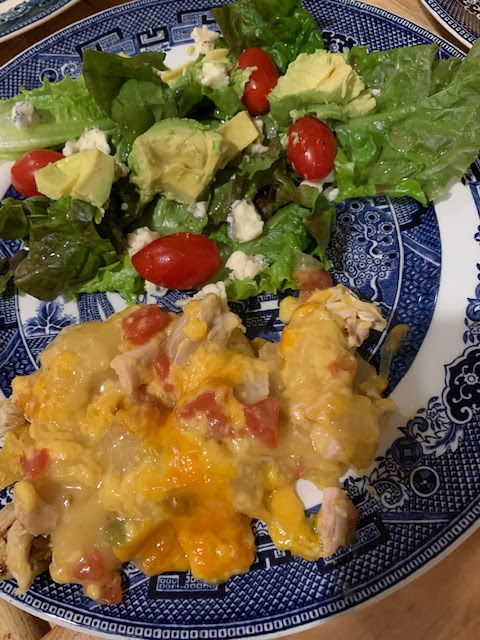
King Ranch Chicken Casserole

King Ranch casserole is Texas food. Henny learned to fix it in her mom’s kitchen, and she serves it often to Patrick who loves it. Irene disparages it as Texas food, and she’s not alone. Some noted Texas cookbook authors have been scathing in their criticism of this dish. Texas food historian Mary Faulk Koock wrote, “I suppose it could be made palatable,” but caterer Tilford Collins, who serves some of the oldest families in South Texas, was more blunt. “Never, never, never.” In Texas Monthly, journalist Mimi Swartz described it as a study in beige and yellow and criticized it as bland despite the chile-laced Rotel tomatoes. Bland is a quality Texans generally despise in their food. And yet, most Texans consider this dish a staple.


Culinary authorities agree that is probably derives from the Mexican chilaquiles which combines tortilla chips, tomatoes, chicken, cheese, and chiles. Swartz suggests it may have been the inspiration of an anonymous King Ranch cook with a preference for chicken, even though he was at a beef ranch. I have been to the King Ranch in far South Texas, largest ranch in the US, even spent the night in their guest quarters. The food was outstanding, but there was no sign of the casserole. 


That anonymous cook probably shouldn’t be blamed because the ingredients of today’s casserole are from the fifties when canned soup casseroles hit the heyday of their popularity. Casseroles that could be made quickly and frozen for later use were a big part of freeing housewives from the kitchen in the fifties and sixties. For several years, the casserole stayed a Texas secret, but in the seventies, it began to creep across the country. You may already know it, but if not, here’s an authentic version.


There is some version of the recipe—and there are many—in every Junior League cookbook from Texas, and chef Dean Fearing guessed that it is served in almost every family kitchen in Texas. Generations of Texans swear by this dish. 


And when Henny finds herself representing Texas is a cookoff against Irene’s French recipes, what does she choose? King Ranch. Here’s her recipe:


King Ranch Chicken Casserole

Irene would never make this casserole—Texas food, you know—but if she did, she’d do it the old-fashioned way and boil an old hen. Henny believes in shortcuts, and she uses a rotisserie chicken. Henny is also a great advocate of canned soups in casseroles, something many “gourmands” frown on these days.


Ingredients:

3-4 cups chicken, diced or shredded

16 corn tortillas, torn into small pieces

2 medium onions, chopped

1 can cream of mushroom soup

1 can cream of chicken soup

1/2-1 can Rotel tomatoes, choose the flavor and heat you like; Henny likes lime/cilantro.

Grated cheddar


Layer, in a greased 9 x 13 casserole: tortillas, chicken, onion. Repeat layers. 


Pour the soups and tomatoes over the casserole How much tomato you use depends on how hot you want the dish. Cover with grated cheese and bake at 350° until cheese melts and is brown and casserole is bubbly.


Note: some people add green bell pepper. Henny despises bell pepper and does not use it.


Finding Florence

An Irene in Chicago Culinary Mystery, Book 3


Irene is back in town. And Henny’s life is a mess. 


Irene’s “voices” have told her that something is horribly amiss with a person dear to her.  When she arrives, she learns that a death notice for Florence Sherman, her sometime friend, has been published in the Sun-Times. Once Irene discovers her friend’s body is missing, the diva chef refuses to leave Chicago until she solves the mysterious disappearance. But, with Irene in Chicago, Henny’s successful “From My Mother’s Kitchen” TV cooking show and her precious time with Patrick, husband of her dreams, are seriously compromised by Irene’s insistence that finding Florence trumps any other concerns. 


There’s a nice bit of Chicago history and lots of food talk An appendix of recipes is attached.


Buy Links

paperback 

ebook 

Monday, November 22, 2021

#COOKING WITH CLORIS--MYSTERY AUTHOR JUDY ALTER WHIPS UP A WEDDING MURDER AND SALADE NICOISE

Judy Alter is the author of three previous series—the Kelly O’Connell Mysteries, Blue Plate Café Mysteries, and Oak Grove Mysteries. Irene in Danger is the second in her new Irene in Chicago Culinary Mysteries, Learn more about Judy and her books at her website. judyalter.com 

A wedding in jeopardy and Salade Niçoise 


Irene Foxglove is back in Chicago, Henny and Patrick are getting married in a week, there’s cocaine floating around, and someone wants to kill the diva chef. Once again, Irene brings murder and mayhem to those around her.


Henny spent a year as gofer for “Madame,” helped solve her husband’s murder and save her kidnapped daughter before Irene scooted off to the safety of France. Patrick thinks it charming of Irene to return for their wedding, but Henny believes, deep in her soul, that Irene will ruin the biggest day of her life, upstage the wedding couple, and perhaps force them to postpone the whole thing. Little does she know how right her instincts are.


Madame wants to cater the wedding. Henny has contracted with the head chef at the Palmer House Hotel for the small wedding dinner she wants. Desperate to distract Irene, she suggests a bridesmaids’ luncheon with Salade Niçoise, overlooking the fact that there are to be no bridesmaids. She’ll worry about that later.


Salade Niçoise

Salade Niçoise is a composed salad built around tuna—in France, undoubtedly fresh tuna, but a high-quality, canned variety is perfectly acceptable. Henny likes to do it with canned albacore in olive oil. 


Olives, green or ripe, are traditional, but Henny omits them because olives are on the short list of things she just doesn’t eat, along with bell peppers. If you like them, you may want to add strips, preferably of red peppers. Anchovies are a truly French contribution to the salad, and if you like them, they add a wonderful zing. Julia Child added an anchovy filet, twisted, on each hard-boiled egg quarter and scattered capers and chopped parsley on the finished salad. 


The thing about this main-dish salad is you can create it to your taste. Choose the vegetables you prefer, but with an eye to color and appearance. Suggestions include tiny baby potatoes (peeled, boiled, and cut in quarters, if necessary), haricot vert (those tiny French green beans), thinly sliced small red onion or green onions, parboiled baby carrots, artichoke hearts quartered, cherry tomatoes, hard-boiled eggs. Sometimes Henny adds tender, young asparagus spears if in season. She believes in simplicity—too many vegetables spoil the presentation.


Pour a little dressing over the potatoes when they are warm—they’ll absorb it better. Each vegetable and the tuna should be seasoned with a little dressing before becoming part of the arrangement. Lay out the vegetables and tuna in an attractive pattern, either on a platter or individual plates, on a bed of lettuce. Some cooks group ingredients; others prefer a more casual arrangement. Pour any remaining dressing over. If you need another batch of dressing, make it. You don’t want soup, but you don’t want a dry salad.


Vinaigrette is the traditional dressing for Salade Niçoise. Here’s the one Henny frequently uses (enough for two individual salads):


1/4 c. olive oil

2 tbsp. red wine vinegar

2 tbsp. lemon juice

1 clove garlic, pressed

1 tsp. Dijon mustard

1/2 tsp. salt

1/4 tsp. pepper


And for the wedding dinner? Passed hors d’oeuvres, pear and Brie salad, Lobster Thermidor, and chocolate mousse cake.


Irene in Danger

An Irene in Chicago Culinary Mystery, Book 2


Irene Foxglove is back in Chicago, Henny and Patrick are getting married in a week, there’s cocaine floating around, and someone wants to kill the diva chef. With one week until her wedding, Henny James is convinced Irene’s arrival from France will ruin the biggest day of her life. One week to save Irene from the trouble she brings with her and save the wedding. 


Recipes included.


Buy links:

paperback 

ebook 

Friday, October 1, 2021

#COOKING WITH CLORIS--AUTHOR JUDY ALTER COOKS UP SOME "CRUNCHY SOUP" AND DISCUSSES HER NEWEST AMERICAN WEST NONFICTION WORK

Judy Alter writes both award-winning historical fiction and nonfiction about the nineteenth-century American West as well as contemporary cozy mysteries. Her forthcoming western title is the nonfiction The Most Land, the Best Cattle: The Waggoners of Texas, a popular study of the Waggoner 3D and the Waggoner family. Learn more about Judy and her books at her website. 

Dining at the Waggoner 3D

For most of the twentieth century, the Waggoner 3D was the largest ranch under one fence in this country. Covering over 500,000 acres in six counties, it sprawls across much of North Texas. Founded in the 1850s by Daniel Waggoner, the ranch has been known not only for its size but for its cattle, Thoroughbred horses, and the vast oil reserves under its land. 


Daniel Waggoner was among the first of men known as cattle barons who owned vast stretches of land and held great power over life in their region. Five generations of Waggoner descendants have lived on the land over 167 years, mixing ranching and racing with international fame, marriages, divorces, and lawsuits. The history is nothing if not colorful.


Like other large ranches in Texas and the Southwest, the Waggoner was known for hospitality. What may have begun with gatherings around the chuck wagon, featuring son-of-a-bitch stew and calf fries, evolved into elegant meals at the table. By the late twentieth century when Electra Waggoner Biggs was entertaining in her Santa Rosa home on the 3D, stew had been replaced with Hungarian goulash.


Mrs. Biggs was best known as a sculptor, her signature piece being a life-size statue of entertainer Will Rogers on his horse, Soapsuds. The original piece stands in front of Fort Worth’s Will Rogers Coliseum. Electra, the second Waggoner with that name, loved celebrities, and when she left New York for ranch life, she entertained lavishly.


According to the late Sarah Morgan, author of Dining with the Cattle Barons, Mrs. Biggs planned her menus carefully and always had her staff cook the meal once as practice before serving guests. One of her favorite dishes was the Hungarian goulash, which required cubing eight pounds of beef, dusting with flour, and browning. But, then, she had a staff to do it. Much more accessible is her recipe for chilled tomato soup. She called it “Crunchy Soup.”


When I made the soup recently, I adapted it to two servings instead of the twelve in the original recipe and added some green onions for color and taste. Mrs. Biggs used canned soup, but today’s cooks may want to substitute boxed tomato soup. If using prepared cream of tomato soup, omit the milk. Here’s what I did:


Chilled Tomato Soup

1 can Campbell’s® tomato soup 

Milk of equal amount (refill the soup can)

2 Tbsp. minced celery

2 Tbsp. green onions, minced

1/2 tsp. soy sauce.

Juice of one lime


Mix all ingredients except lime juice and chill. Just before serving add fresh juice of a medium lime. Serve very cold. Top with a dollop of sour cream if desired.


The Most Land, the Best Cattle

The Waggoners of Texas


In the 19th century, Daniel Waggoner and his son, W.T. (Tom), put together an empire in North Texas that became the largest ranch under one fence in the nation. The 520,000-plus acres or 800 square miles covers six counties and sits on a large oil field in North Texas. Over the years, the estate also owned five banks, three cottonseed oil mills, and a coal company. While the Waggoner men built the empire, their wives and daughters enjoyed the fruits of their labor. This dynasty’s love of the land was rivaled only by their love of money and celebrity. This colorful history of one of Texas’s most influential ranching families demonstrates that it took strength and determination to survive in the ranching world…and the society it spawned.


Buy Link 

Tuesday, September 15, 2020

#COOKING WITH CLORIS--AUTHOR JUDY ALTER'S HAMBURGER STROGANOFF


We’re always happy to welcome back award-winning author Judy Alter. After a long career writing historical fiction about women of the nineteenth century American West for adults and young adults, Judy began writing contemporary cozy mysteries. She now has three series as well her current release, a standalone—which may eventually wind up being the first in a new series. Judy currently lives in a small cottage with a postage-stamp sized kitchen without a stove. So, she wrote a cookbook about it, 
Gourmet on a Hot Plate. Today Judy shares a recipe that plays a part in her latest book. Learn more about Judy and her books at her website.
 

Let’s Hear it for American Food


When Henny James tries to add hamburger Stroganoff to the menu her chef/boss Irene Foxglove will cook on the TV show, Madame, a French-ish snob about cooking, is indignant that she would be asked to cook with ground meat, the stuff peasants eat. Stroganoff is traditionally made with beef tenderloin, which is expensive; if you want to cut corners, you can use a cheaper cut and simmer it a long time. Henny points out that hamburger is both quick and inexpensive, which will appeal to American cooks. Besides, it retains all the flavor of the original Russian dish.


But this incident in Saving Grace illustrates a larger theme in the cozy mystery—the return of American food to popularity in a nation that has wildly embraced everything from Japanese to Middle Eastern cuisine. In the Sixties and Seventies, James Beard, himself a French-trained chef, was the spokesman for the American menu, pointing out that it is, like the nation, a melting pot of international cuisines. But Beard died in 1985, and no one major took up that banner. International cuisines—please don’t call them ethnic, which is a bit derogatory—became the fashion. Today, that trend is reversing, thanks to some prominent TV chefs and such enduring publications such as Southern Living.


So what is American cuisine? It’s hard to define because it encompasses so many regional cuisines—southern, Cajun, southwestern, Pacific rim, etc.—and incorporates many cooking techniques, from Native American to European (yes, Madame, and French!). If there is one key to American food, it is variety. Among the most popular dishes are cheeseburgers and hot dogs, nachos and barbecue, po’ boy sandwiches and fried chicken, apple pie and s’mores. See a pattern here? They are all accessible dishes, easily duplicated by the home cook, and the ingredients are readily available in most grocery stores. No need to go on a desperate search for gochuchang (a red chili paste) or truffles (a French delicacy). Hamburger Stroganoff fits right in as an American dish.


Hamburger Stroganoff

Serves six; may be halved easily; makes good leftovers

2 lbs. ground sirloin

1/2 cup flour

1 tsp. salt

1/2 tsp. pepper

4 Tbsp. butter, divided

1/2 cup finely diced onion

1/2 lb. mushrooms, sliced

2 cups beef stock

1 lb. egg noodles

1 cup sour cream

3 Tbsp. tomato paste

1 tsp. Worcestershire sauce


Brown ground meat in 2 Tbsp. butter. If necessary, brown in batches. Stir in flour, salt and pepper. Remove meat from skillet. Brown onion in remaining 2 Tbsp. When onion is translucent, add mushrooms and sauté until nicely wilted. Add beef stock and bring to slight boil, cooking until sauce thickens. Add meat to mixture and heat. 


Cook noodles and drain.


Mix sour cream, tomato paste and Worcestershire sauce. Stir a spoonful of hot beef mixture into the sour cream, and then stir the whole thing back into the meat. DO NOT LET IT BOIL. Mix thoroughly and stir to warm the sour cream. 


Serve immediately, either over noodles or separately. 


Saving Irene, 
A Culinary Mystery

Irene Foxglove wishes she were a French chef. Henrietta James, her assistant, knows she is nothing more than a small-time TV chef on a local Chicago channel. And yet when Irene is threatened, Henny tries desperately to save her, wishing always that “Madame” would tell her the truth--about her marriage, her spoiled daughter, her days in France, the man who threatens her. Henny’s best friend, the gay guy who lives next door, teases her, encourages her, and shares meals with her, even as she wishes for more. 


Murder, kidnapping, and some French gossip complicate this mystery, set in Chicago and redolent with the aroma of fine food.


Buy Link 

Sunday, March 22, 2020

AUTHOR JUDY ALTER WRITES ABOUT THE SECOND BATTLE OF THE ALAMO

The Alamo
You may Judy Alter know her as a mystery author, but Judy wears several literary hats, as the prolific author of fiction and nonfiction for adults and young adults. She’s focused much of her career on writing about women of the American West and has been honored with the Western Writers of America Owen Wister Award for Lifetime Achievement. She’s been inducted into both the WWA and the Fort Worth Public Library Literary Hall of Fame. Learn more about Judy and her books at her website and her two blogs: http://www.judys-stew.blogspot.com and http://www.gourmetonahotplate.blogspot.comToday Judy joins us to tell us about the latest addition to her books on American West women.

The Second Battle of the Alamo

Every year over two million people visit Mission San Antonio de Valero, better known as the Alamo, site of the massacre by Mexican soldiers under Santa Anna of heroes of the 1836 Texas Revolution--Davy Crockett, Jim Bowie, and William B. Travis, along with more than two hundred men other men. If you haven’t visited, the Alamo should be high on your bucket list. There’s something breathtaking about standing in front of that iconic chapel or looking at the adjacent long barracks.

When you visit this shrine, you should know the story not only of the siege but also of the second battle of the Alamo. In 1903, the threat of demolition hung over the remaining portions of the mission. Two women combined their efforts to preserve the historic site. 

Adina De Zavala had the passion for historical accuracy; Clara Driscoll had the money. Neither could have saved the Alamo alone, but together they bought the long barracks, where the Battle of the Alamo was actually fought, from private owners and turned it over to the Daughters of the Republic of Texas to manage. 

Although they were very different—one was a young Anglo woman with untold wealth who had been on grand tours of Europe, the other of Hispanic descent, approaching middle age, who had never traveled beyond Texas—theirs was a natural union. 

However, hard headedness—sometimes a Texas trait—turned what was once a friendship into bitter rivalry that reached a zenith when Adina barricaded herself in the long barracks for three days. The ladies’ fight to save the mission and their own fight has come to be known as the second battle of the Alamo.

Clara wanted the chapel to stand alone, in a park-like setting, as a shrine to the martyred heroes. She offered to pay for the demolition of the long barracks. Adina held firm that the fighting took place in the barracks, and the building must be preserved for its historic significance. Both women were members of the Daughters of the Republic of Texas, and their enmity tore the organization apart. 
The Long Barracks 
Eventually, Adina won the battle but lost the war. The long barracks was preserved, but she and her followers were expelled from the DRT. For almost a hundred years, Clara was hailed as the “Savior of the Alamo,” while history ignored Adina. 

Clara was never involved in another historic preservation project. Adina, on the other hand, devoted her long life to historic preservation, exploring missions in East Texas and saving the Governor’s Palace in San Antonio. An early member of many of Texas’ history-oriented organization, such as the Texas State Historical Society, she tirelessly collected information and fought for her cause, Not until the 1990s did historians begin to look with any depth at her part in saving the Alamo.

The Alamo has withstood many battles since it’s eighteenth-century founding and today stands as a symbol of heroism and loyalty. It has inspired everything from movies to jigsaw puzzles. The cry of “Remember the Alamo” is known throughout the world. But few people know that without these two women, the Alamo might well be just another shabby shrine—or worse yet, a parking lot.

So go visit the Alamo, stand outside the barred windows of the long barracks and maybe, just maybe, you can see Adina peering out from the room where she took her stand, the very room where, it is said, that William B. Travis died.

The Second Battle of the Alamo
By 1900, the tale of the 300 Texans who died in the 1836 battle of the Alamo had already become legend. But to corporate interests in the growing City of San Antonio, the land where that blood was shed was merely a desirable plot of land across the street from new restaurants and hotels, with only a few remaining crumbling buildings to tell the tale. When two women, Adina Emilia De Zavala, the granddaughter of the first vice-president of the Texas Republic, and Clara Driscoll, the daughter of one of Texas’s most prominent ranch families and first bankers, learned of the plans, they hatched a plan to preserve the site—and in doing so, they reinvigorated both the legend and lore of the Alamo and cemented the site’s status as hallowed ground. These two strong-willed, pioneering women were very different, but the story of how they banded together and how the Alamo became what it is today despite those differences, is compelling reading for those interested in Texas history and Texas’s larger-than-life personality.

Buy Links

Monday, November 5, 2018

#COOKING WITH CLORIS--AUTHOR JUDY ALTER'S NEW COOKBOOK

Today we welcome back frequent visitor Judy Alter. Judy writes three different mystery series as well as historical fiction based on the lives of women in the nineteenth century American West. She’s recently written a cookbook and is here today to tell us about it. Learn more about Judy and her books at her website

A New Cookbook…and an Old Spaghetti Sauce Recipe

A little more than two years ago I moved from a 2,000-square-foot house, where I’d lived for twenty-five years, into a 600-square-foot cottage (a remodeled garage/guest house) on the same property. It meant downsizing big time. My daughter and I were ruthless about clothes, books, even my beloved but appalling recipe collection. And kitchen utensils.

Size dictated that my kitchen be the size of a postage stamp, so it is way short on counter space. A bigger complication: local zoning laws forbid more than one full kitchen on a property. That means I cannot have built-in appliances such as a stove or dishwasher. Anything you plug in is okay, so I have a large refrigerator, toaster oven, magnetic hot plate, and coffee maker. I do not have a microwave, an Instant Pot, an air fryer, or a crock pot.

My cooking changed dramatically. My magnetic hot plate became the center of my cooking. I learned to do all kinds of things on it. I also learned that it cooks hot and fast—and you have to push the start button. That was a biggie. The first time I used it, I set the temperature I wanted and waited for the pan to heat. My daughter was with me. We put a lamb chop in the pan. Nothing. No sizzle. She held her hand out to feel heat, put her ear down, poked the meat. Nothing. Then we saw the start button.

The hot plate requires special pots and pans, which of course you buy from the company that sold you the hot plate. Gone, with regret, are the days of cooking in a cast-iron skillet. These new pots and pans will scorch food if you turn your back, but they are super easy to clean, and I have one large pot in which I can simmer a pot of soup all day.

But with one hot plate, you cannot, for instance, cook pasta and sauce at the same time. If I use the hot plate and the toaster oven, I blow a fuse. So I developed a new technique. If the pasta must sit a bit while I fix the sauce, I stir just a bit of olive oil in to keep it from clumping. Then I give it a quick re-heat before adding the sauce.

Gradually, as I learned new techniques, the idea for a cookbook formed. A friend suggested the title, Gourmet on a Hot Plate, and I began collecting recipes for the things I cooked—some new experiments, many old familiar dishes adapted to my new situation. Believe me, there were some disasters. I regularly burned things, even in the toaster, which set off the smoke alarm more than once. The smoke alarm hurts my dog’s ears, and she associates it with the toaster, so Sophie now begins barking when she sees me with a slice of bread in my hands. But Gourmet on a Hot Plate includes lots of cooking tips along with some tasty recipes.

Gourmet on a Hot Plate will be available as an e-book and in print November 15, perfect for holiday gift giving. It’s currently available for pre-order. Meantime, here’s a spaghetti sauce recipe a good friend contributed. Her mom got it from a woman in Rome in 1950. When I made it, even twelve-year-old Jacob said it was good, really good—and such praise is hard to come by.

Spaghetti Sauce
Ingredients
1 medium onion, chopped
2 cloves garlic, pressed
1 lb. lean ground beef
2 Tbsp. olive oil
1 6 oz. can tomato paste
1 14.5 oz. can diced tomatoes
1 14.5 oz. can tomato puree
1/2 tsp. each sage, rosemary, oregano, thyme, savory, marjoram, and basil
Salt and pepper to taste

Cook the onions and garlic in olive oil until onions are slightly softened. Add spices and mix thoroughly.

Add tomato paste, puree and diced tomatoes, and stir well. Simmer on low heat for about three hours or in a slow cooker for six hours.

Serve with your favorite pasta and fresh grated Parmesan.

Gourmet on a Hot Plate
Without formal culinary training, Judy Alter has cooked her way through life, feeding family and friends at everything from casual dinners al fresco to elaborate meals for twenty. An award-winning author and publisher, she jokes she’ll come back in another life as a chef.

Today Alter finds herself cooking in a four-by-six kitchen where zoning laws forbid built-ins but allow anything that plugs in. So she cooks with a hot plate, a toaster oven, and a large refrigerator/freezer. Given these limitations, she has developed a new approach to food, one that she says lets her get in touch with the food itself. By choice, she does not have an Instant Pot, an air-fryer, or a microwave. Her menu choices are dictated by her cooking facilities—and she loves it. She shares her tiny kitchen tips and recipes, developed over the past couple of years, in Gourmet on a Hot Plate.

Buy Link (now available for pre-order)

Monday, April 23, 2018

#COOKING WITH CLORIS--AUTHOR JUDY ALTER ON LEFTOVERS

We’re always happy to have author Judy Alter stop by for a visit. Judy writes three different mystery series as well as historical fiction based on the lives of women in the nineteenth century American West. Today she’s here to talk about leftovers. Learn more about Judy and her books at her website

Leftovers—Save Them or Pitch Them?

My mother was a child of the Depression, and consequently she saved things all her life—bits of string, small pieces of aluminum foil, and leftovers. Oh my, did she save leftovers. When we had to clean out her fridge, my brother and I were astounded at the tiny jars of unidentifiable stuff on the back of shelves—some of it growing mold.

Once I had my own kitchen and family of four kids, Mom thought I was wasteful. She’d ask me what to do with a small dab of leftovers and, before I could answer, she’d say sarcastically, “I know, pitch it.” Truth was, that a small dab of something did little good when you’re feeding six or seven (unless you throw it in the soup pot).

Nowadays, living alone, I try to be more frugal. Recently, a chunk of boneless chicken breast stared at me when I opened the fridge, challenging me to use it. So I invented a quick way of doing chicken stroganoff. Here’s my rough approximation of how I made what I thought was enough for one and turned out to be two meals.

Make a cup of beef bouillon or use a cup of refrigerated broth. Pre-cook some pasta,, about a cup of whatever you have on hand. I used rigatoni because that’s what I had. Rinse it with cold water so it doesn’t stick and swish a little butter into it. Set it aside.

Sauté a generous cup of cubed chicken in a mixture of butter and olive oil. Dump in baby green peas to taste—or omit. When chicken is heated and beginning to brown, stir in one T. flour. Mix thoroughly. Stir in the broth in about two batches, waiting until it thickens enough to make a sauce. Add pasta. At the last minute, dump in a T. of sour cream. Stir and serve.

Your instinct may be to use chicken broth, but trust me, the beef gives it a more robust flavor. I liked this so much I ate it three nights in a row. Hope Mom was watching and smiling.

Murder at the Bus Stop
A Blue Plate Café Mystery

Dallas developer Silas Fletcher sees endless real estate opportunities in Wheeler, Texas if only he can “grow” the town. Blue Plate Café owner Kate Chambers likes her hometown just the way it is, thank you very much, without big box and chain stores. When Fletcher tries to capitalize on a thirty-year-old unsolved murder, Kate knows she must fight for her town, and she uses historic preservation of the old bus depot as one of her weapons. A suspicious death and a new murder make her also fight for her own life.


Buy Links